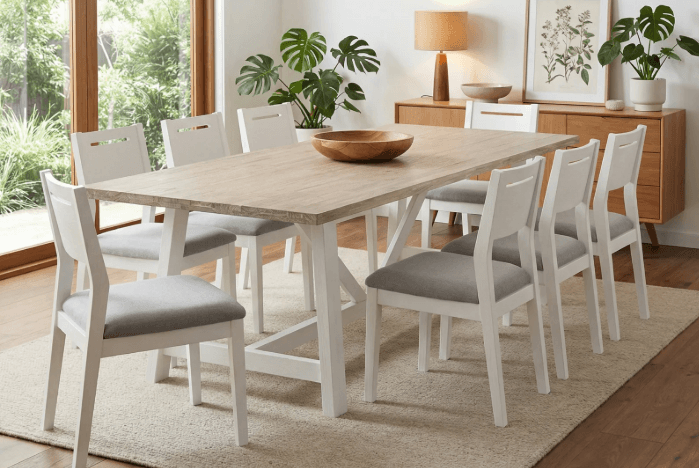
The dining chair is the most used piece of furniture in any home — pulled out multiple times a day, leaned on, stacked with bags, and occasionally stood on. Yet most people choose chairs based on how they look in a product photo rather than how they hold up over years of daily use. Getting this decision right means thinking through material, comfort, proportion, and how the chairs interact with the table and room. Dining chairs come in a wide range of constructions and price points, and understanding the differences before you buy saves the frustration of chairs that wobble after six months or seats that feel uncomfortable before the main course arrives.
Start With the Table, Not the Chair
A common mistake is falling for a chair and then wondering why it feels awkward at the table. Proportion is everything. The standard dining table height is between 74 and 76 centimeters. For comfortable seating, you need a gap of roughly 25 to 30 centimeters between the seat surface and the tabletop — this gives enough room for legs and lets people sit without hunching.
If the table has an apron (the horizontal rail beneath the tabletop edge), check that the chair arms, if any, can slide underneath it. Armless chairs are generally safer for tables with low aprons.
Material Guide: What Each Option Actually Delivers
Fully Wood Chairs: Solid wood dining chairs — rubberwood, mango wood, acacia — are durable and age well. Rubberwood is dense and resistant to warping, a practical choice for humid climates. Darker finishes hide everyday scuffs better than lighter ones.
Upholstered Chairs: Fabric and boucle upholstered chairs add warmth and comfort for longer meals. Boucle works well across both contemporary and transitional interiors. Microfiber upholstery is easier to wipe clean than standard fabric, making it better suited for households with children.
Wood with Rattan: Rattan detailing — woven seats or back panels — adds texture without visual weight. This combination suits coastal, Japandi, or nature-inspired interiors.
Metal-Legged Chairs: Metal legs with upholstered seats offer a clean, contemporary look with solid structure. This construction tends to be lighter in visual weight, which suits smaller dining areas where fully solid pieces can feel imposing.
Comparing Popular Styles at a Glance
The following chair styles, materials, and price ranges are based on the latest collection from homekode.com:
| Chair Style | Best For | Material | Price Range (AED) |
| Alto Upholstered | Contemporary minimal spaces | Wood + fabric/leather | 595 – 995 |
| Grazia Rubberwood | Warm traditional interiors | Fully wood | ~975 |
| Lyla Boucle | Soft, textural looks | Wood + boucle | ~750 |
| Brinley Metal Leg | Urban industrial or transitional | Metal + boucle | ~645 |
| Matilda Rattan | Coastal or organic interiors | Wood + rattan | ~695 |
| Vicky Wood Off White | Scandi or farmhouse style | Fully wood + seat | ~695 |
How Many Chairs Do You Actually Need?
Allow a minimum of 55 to 60 centimeters of table edge per person for comfortable elbow room. For a 140-centimeter-long table, four chairs is the practical maximum. A 180-centimeter table comfortably seats six.
Matching dining tables to chairs in both scale and material is where the real design work happens. A heavy travertine table pairs best with chairs that have visual weight — fully upholstered seats or solid wood frames — whereas a slender mango wood table reads better with lighter constructions like rattan or metal-legged options.
See also: 5 Questions Every Medina Homeowner Should Ask Before Hiring a Painting Contractor
Bar Stools vs. Dining Chairs: When to Use Which
If you have a kitchen island or counter-height surface (88 to 95 centimeters), bar stools replace standard dining chairs. Standard dining chairs at counter height leave legs dangling, which becomes uncomfortable quickly. Choose stools with footrests positioned to support the legs properly at elevation.
Practical Checklist Before You Buy
Before placing an order, run through these points:
- Measure the gap between your table’s underside and the floor — seat height should be 25 to 30 cm below the tabletop
- Check whether the chair arms (if any) clear the table apron
- Consider how the upholstery or finish will respond to your household’s cleaning routine
- Think about whether the chairs will be pulled out frequently — smooth feet or felt pads slide more easily on hard floors
- Decide early whether you want a uniform set or a mixed look; mixing two chair styles requires keeping one variable consistent (finish, leg material, or colour family)
Final Thoughts
The best dining chair disappears into daily life — sturdy enough to be forgotten about, comfortable enough for long meals, and good-looking enough to set the tone for the whole room. Spending time on proportion, material, and scale before committing to a style will result in a dining setup that works harder and lasts longer. What matters most to you in a dining chair — comfort for long dinners, easy cleaning, or the overall aesthetic?